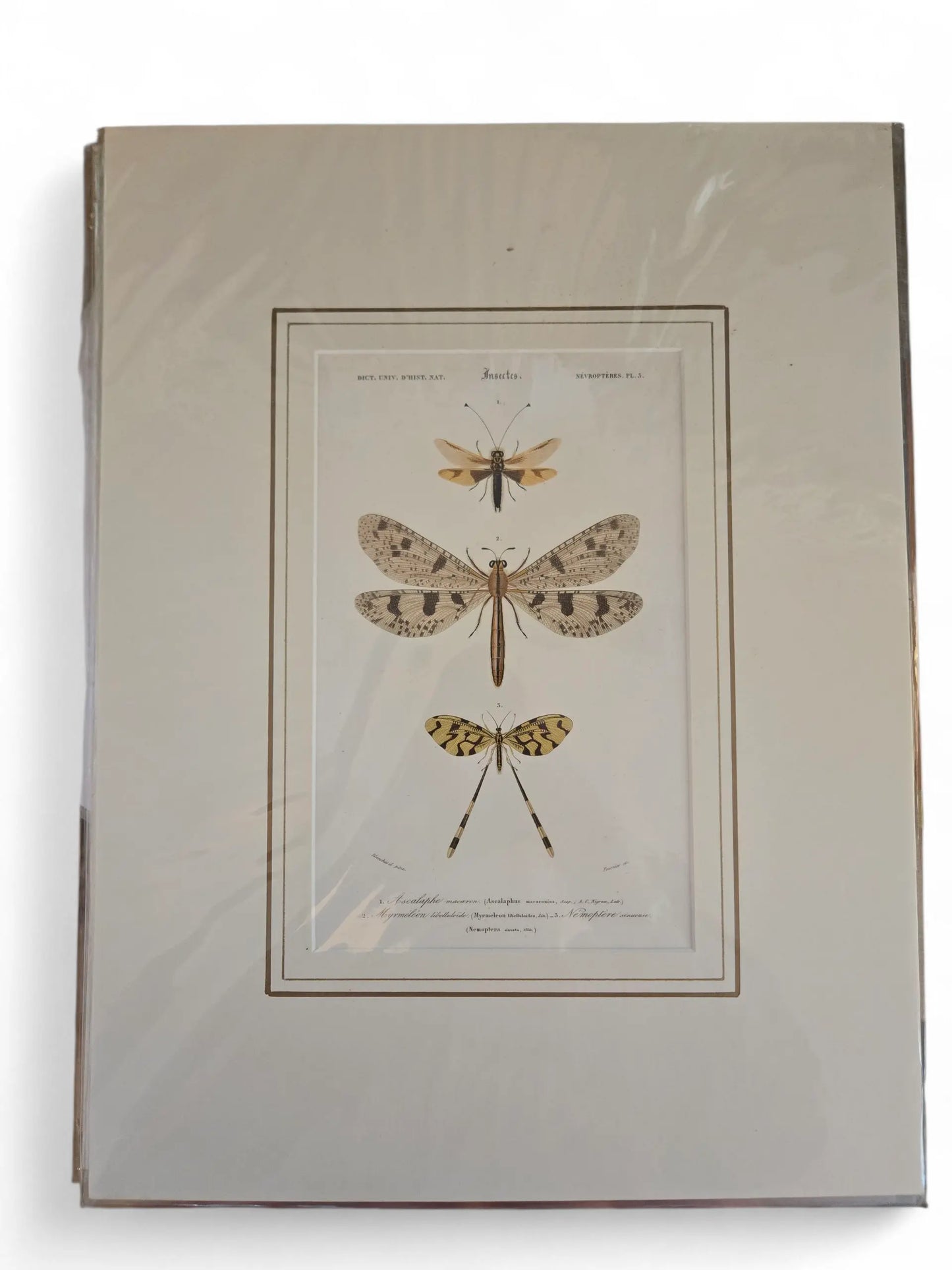
Dictionary Natural History Insect lithographs
Dictionary Natural History Insect lithographs
Couldn't load pickup availability
Antique Insect Lithographs: Art, Science, and Natural History Combined
Dictionary
A lithograph is a print made by drawing on a flat stone (usually limestone) with a greasy substance, then treating the surface to allow ink to adhere only to the drawing. The term insect lithograph refers to a lithographic print depicting insects, often created for scientific, artistic, or decorative purposes.
History
During the 18th and 19th centuries, insect lithographs became essential tools for education and research. Naturalists and explorers commissioned these detailed prints to document newly discovered species. Their beauty, however, extended beyond science; they were collected as works of art, often bound in natural history volumes or displayed in study rooms. Today, antique insect lithographs are highly valued by collectors for their ability to preserve both scientific accuracy and artistic craftsmanship from a bygone era.
Features
-
Authentic antique lithographs showcasing insect species
-
Hand-colored details, often applied by skilled artisans
-
High-quality prints on aged paper with visible patina
-
Subjects include butterflies, beetles, dragonflies, and other specimens
-
Original works dating from the 18th–19th centuries
Benefits
-
Offers a rare glimpse into natural history and early scientific study
-
Serves as elegant wall décor with timeless artistic value
-
Appeals to collectors of both art and science memorabilia
-
Adds academic charm to libraries, studies, and curated interiors
-
Represents a unique fusion of science, history, and beauty
Owning an antique insect lithograph means holding a piece of history that celebrates nature’s detail and human artistry. Whether for study, collection, or décor, these prints transform any space into a gallery of timeless natural wonder.
Share